
Daniel Douek Yadger
July 13, 2026
5
min read
Brands using Yotpo know the value of customer reviews. But businesses that are looking to succeed in today's visual age need more than just a reviews platform - they need a visual reviews solution that drives conversions without the complexity, premium pricing, or white-glove dependency that comes with enterprise-focused tools.
Yotpo is a solid platform for enterprise brands with dedicated teams and big budgets. But for most Shopify brands, it's overkill—and expensive. Here's why merchants look elsewhere:
With these challenges in mind, here are the top alternatives designed to help eCommerce brands grow without the enterprise overhead.
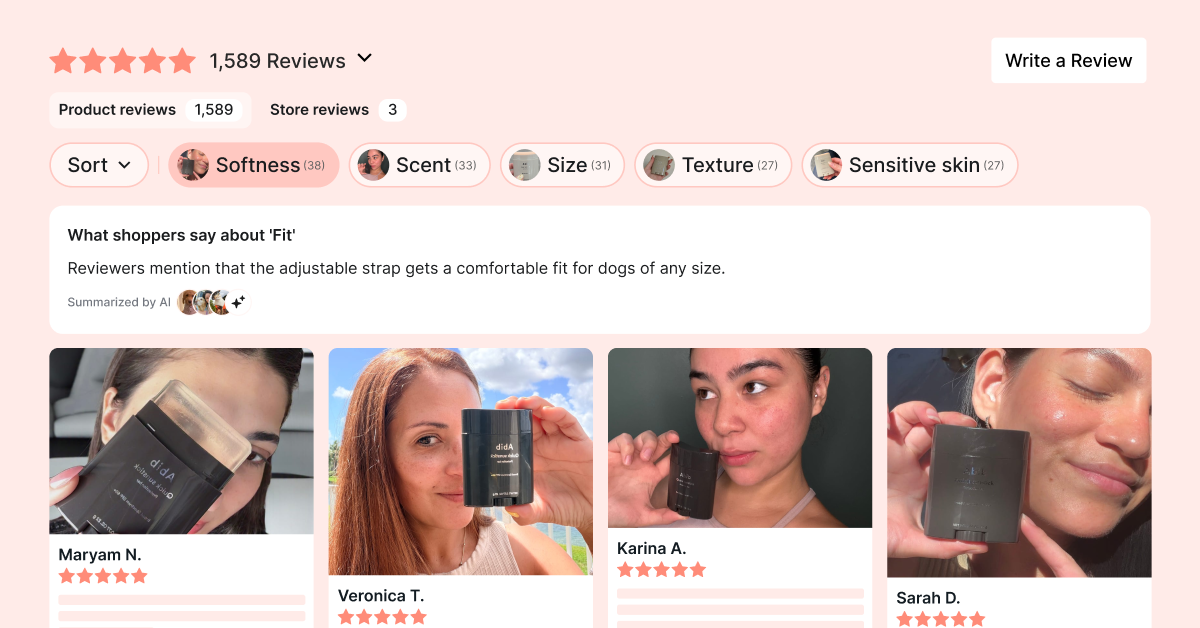
Loox is the leading visual reviews platform for Shopify, trusted by over 130,000 brands and 3,000 Shopify Plus stores. It's built for merchants who want the power of visual social proof without the complexity of enterprise platforms. Loox puts photo and video review collection on autopilot and provides beautiful, conversion-optimized ways to showcase them everywhere.
Key Features
Loox is designed for merchants who want results, not complexity.
Pricing
Loox offers transparent, value-driven pricing:
Pros & Cons
Pros:
Cons:
Judge.me is one of the most popular review apps on Shopify, primarily because of its free plan. It's often the first choice for new stores and budget-conscious merchants who need a functional review solution without upfront costs.
Key Features
Pricing
Judge.me offers a "Forever Free" plan that includes core features but displays Judge.me branding. The paid plan is $15/month and removes branding while adding features like review carousels and more customization options.
Pros & Cons
Pros:
Cons:
Compared to Loox: Judge.me offers a solid free option for new stores, but Loox delivers 2-3x better visual review collection rates (7%+ vs. 2-3%), AI-powered optimization, and built-in conversion tools like referrals and upsells. When brands are ready to actually drive conversions from reviews, Loox's focused approach wins.
Stamped is a comprehensive UGC platform that extends beyond reviews to include Q&A, photo galleries, NPS surveys, and loyalty features. It's positioned as a middle-market solution with a robust feature set for brands looking to consolidate multiple marketing functions.
Key Features
Pricing
Stamped provides a limited self-serve plan for smaller brands starting at $23/month, with higher tiers scaling based on order volume. The standard "Reviews" plan starts at $199/month. Plans combining reviews with loyalty features start around $499/month, with $798 for lifecycle automation included.
Pros & Cons
Pros:
Cons:
Compared to Loox: Stamped offers more feature variety across UGC types, but Loox delivers significantly better visual review collection rates (7%+ vs. 2-3%), simpler implementation, and includes conversion tools like referrals without requiring expensive loyalty add-ons. If the primary goal is driving sales through photo and video reviews, Loox's specialized approach delivers better results.
Okendo is a premium review platform built for high-growth Shopify brands. It's particularly known for collecting detailed customer data through its "Attributes" feature, which captures specific product characteristics like fit, quality, or material.
Key Features
Pricing
Okendo sits at the premium end of the market. The "Essential" plan starts at $19/month (up to 200 orders), the "Growth" plan is about $119/month (up to 1,500 orders), with higher tiers scaling significantly in price for larger order volumes.
Pros & Cons
Pros:
Cons:
Compared to Loox: Okendo excels at structured data collection through Attributes, but Loox delivers better overall visual review collection rates and includes conversion tools (referrals, upsells, AI optimization) that Okendo charges premium prices for or doesn't offer. For most brands, Loox provides better ROI at comparable or lower pricing.
REVIEWS.io is an official Google Review Partner known for its strong integration capabilities and specialized tools for collecting and showcasing video reviews. It's positioned as a comprehensive solution for brands that want deep platform integrations.
Key Features
Pricing
REVIEWS.io plans scale with monthly order volume. The "Essentials" plan starts around $29/month for up to 300 review requests, the "Start-Up" plan is about $99/month for up to 1,500 review requests, and Enterprise solutions start from $499/month.
Pros & Cons
Pros:
Cons:
Compared to Loox: REVIEWS.io offers strong video review tools and Google integration, but Loox delivers better overall visual review collection rates (7%+ submission rates with 25-50% visual content) through optimized automation. Loox also includes reviewers.com for professional video review campaigns and offers simpler implementation at better pricing for most Shopify brands.
Junip offers a modern, design-focused alternative with emphasis on clean UX, brand consistency, and mobile-first experiences. It's built for brands that prioritize aesthetic excellence and seamless brand alignment.
Key Features
Pricing
Junip offers a free plan for basic features. The "Core" plan is about $29/month, while a "Premium" plan with more advanced features runs around $299/month.
Pros & Cons
Pros:
Cons:
Compared to Loox: Junip offers excellent design, but Loox delivers comparable aesthetics plus significantly better collection rates (7%+ vs. industry average 2-3%), comprehensive AI-powered features, built-in conversion tools, and more robust analytics—all at similar or better pricing. When design meets performance, Loox wins.
Vitals takes a unique approach by bundling over 40 different Shopify applications into a single subscription. Product Reviews is just one feature alongside tools like Product Bundles, Currency Converters, wishlists, and more.
Key Features
Pricing
Vitals charges a flat monthly fee regardless of order volume. The "All-in-one" plan is $29.99/month, while tiered usage-based pricing is available, too.
Pros & Cons
Pros:
Cons:
Compared to Loox: Vitals offers incredible value if many different tools are needed, but its review features can't compete with Loox's specialized focus. Loox delivers 2-3x better visual review collection rates, AI-powered optimization, superior widgets, and conversion tools designed specifically to turn reviews into revenue. If reviews are a priority, Loox is the better choice with other tools added as needed.
Kudosi is a highly specialized solution built specifically for dropshipping businesses, particularly those sourcing products from AliExpress. Its primary function is importing existing product reviews from marketplaces directly into Shopify stores.
Key Features
Pricing
Kudosi offers a free plan with basic importing features. Paid plans are affordable, with tiers starting around $14.95/month and going up to about $49.95/month for unlimited review imports.
Pros & Cons
Pros:
Cons:
Compared to Loox: Kudosi serves a specific dropshipping use case that Loox doesn't target. However, for brands selling their own products or building authentic customer relationships, Loox's focus on collecting real reviews from actual customers (at 7%+ rates with 25-50% visual content) creates genuine social proof that drives long-term trust and conversions.
Opinew is another review importer with broader marketplace coverage than Kudosi. It allows merchants to pull reviews from multiple major marketplaces including Amazon, eBay, AliExpress, and more.
Key Features
Pricing
Opinew offers a free plan with limited features. Paid plans scale based on store orders, with the "Starter" plan around $19/month and an "Enterprise" plan starting at $499/month.
Pros & Cons
Pros:
Cons:
Compared to Loox: Opinew serves brands that need to import existing marketplace reviews, but Loox focuses on what matters more: collecting authentic reviews from actual customers. With 7%+ collection rates and 25-50% visual content, Loox helps brands build genuine social proof that shoppers trust more than imported marketplace reviews.
Rivyo is an affordable app that combines basic product reviews with a simple loyalty program, allowing customers to earn points for purchases and for leaving reviews.
Key Features
Pricing
Rivyo provides a free "Indie" plan with limited features. Paid tiers are very affordable, starting at $9/month and going up to $19/month for the "Enterprise" plan.
Pros & Cons
Pros:
Cons:
Compared to Loox: Rivyo offers extreme affordability by combining basic reviews and loyalty, but Loox delivers professional-grade results: 2-3x better visual review collection rates (7%+ vs. 2-3%), AI-powered optimization, beautiful widgets, built-in referrals, and conversion tools that actually drive revenue. When brands are ready to scale beyond basic functionality, Loox provides the sophistication they need.
The right Yotpo alternative depends on business stage and priorities:
For brands serious about conversions: Choose Loox. Brands collect 2-3x more visual reviews (7%+ submission rates with 25-50% visual content), get AI-powered optimization, unlock built-in referrals and upsells, and access professional tools like Loox Studio and reviewers.com—all for dramatically less than Yotpo's enterprise pricing.
For brand-new stores on zero budget: Consider Judge.me for a solid free starting point, but plan to upgrade to a specialized platform like Loox when ready to actually drive conversions.
For dropshippers needing imported reviews: Kudosi or Opinew serve that specific use case, though authentic reviews from real customers always perform better long-term.
For all-in-one app consolidation: Vitals offers incredible breadth across 40+ tools, but sacrifices depth in review-specific optimization.
For design-obsessed brands: Junip offers beautiful forms, but Loox delivers comparable aesthetics plus superior collection rates and conversion tools.
For enterprise brands with big budgets and dedicated teams: Yotpo, Okendo, or REVIEWS.io offer sophisticated feature sets, though most mid-market brands don't need (or use) that complexity.
The bottom line: For most Shopify brands—especially those paying premium prices for Yotpo without fully utilizing enterprise features—Loox delivers the best combination of superior visual review collection rates, effortless automation, built-in conversion tools, AI optimization, and straightforward pricing.
Brands don't need complexity. They need results.
What makes visual reviews more effective than text reviews?
Photo and video reviews drive up to 91% higher conversions than text alone because they provide authentic, real-world proof that shoppers can relate to. Visual content shows the product in use, builds trust instantly, and answers questions text can't address (like fit, color accuracy, or size).
Can reviews be migrated from Yotpo to another platform?
Yes. All major review platforms, including Loox, provide simple migration tools and support for importing existing reviews. Brands won't lose the valuable social proof they've already built. Most migrations take minutes, not hours.
Why do Loox merchants collect more reviews than other platforms?
Loox achieves 7%+ review submission rates (vs. industry average of 2-3%) through smart timing, proven incentive strategies, and automated reminders that maximize engagement. Loox merchants also see 25-50% of reviews include photos or videos because the platform makes it effortlessly easy for customers to add visual content.
Is Yotpo worth the premium pricing?
For enterprise brands with dedicated marketing teams and complex, multi-channel strategies, Yotpo's comprehensive platform can justify the investment. For most mid-market Shopify brands, it's overkill. Brands pay for features they'll never use while missing out on better visual review collection and simpler workflows.
What's the difference between enterprise features and features that actually drive sales?
Enterprise features often focus on sophisticated reporting, complex workflows, and multi-team coordination. Features that drive sales focus on collection rates, conversion optimization, and making it effortless to turn happy customers into marketing assets. Most growing brands need the latter, not the former.
Should brands use a review importer or collect reviews from real customers?
Imported reviews from marketplaces like Amazon or AliExpress can provide quick social proof for dropshippers, but authentic reviews from actual customers always perform better. Shoppers can spot the difference, and platforms like Google increasingly prioritize verified purchase reviews. Building genuine social proof takes more time but delivers better long-term results.
Do brands need separate apps for referrals and upsells?
Not with Loox. Referrals (on-site, post-purchase, and post-review) and post-purchase upsells are built into all Loox plans. Brands don't pay extra or juggle multiple app subscriptions. It's all included, and it all works together seamlessly.
How does AI improve review collection and display?
Loox's AI Visual Suite works 24/7 to optimize reviews: Smart Timing sends requests when customers are most likely to respond, Smart Review Sorting displays the highest-impact photos first, AI Highlights pulls persuasive phrases from long reviews, Theme Matcher instantly customizes widgets to brand aesthetics, and AI Replies generates smart responses to customer feedback. It's hands-off optimization that drives better results.
Should brands show negative reviews?
Absolutely. Displaying a mix of star ratings (including 3- and 4-star reviews) builds more trust than pages of perfect 5-star reviews. It shows authenticity and transparency. Shoppers specifically look for balanced reviews to make informed decisions. Plus, addressing negative feedback publicly demonstrates great customer service.
How quickly can brands start collecting reviews after switching platforms?
With Loox, brands can start collecting reviews the moment they install. Setup takes minutes, not days. No onboarding calls required, no technical implementation, no waiting for an "account team" to configure settings. It works on autopilot from day one.
What's the real cost difference between Yotpo and alternatives?
Yotpo's enterprise pricing can range from hundreds to thousands per month depending on order volume and features. Loox's pricing is transparent and predictable: the Beginner plan is free for up to 500 orders, the Convert plan is $49.99/month with usage-based pricing capped at $799/month, and the Unlimited plan is $299/month for unlimited orders. For most mid-market brands, that's substantial annual savings while getting better visual review collection rates and simpler workflows.
Can reviews be used in marketing campaigns outside the store?
Yes. Loox Studio lets brands instantly transform customer reviews into social media visuals with one click. All photos and videos can be downloaded in full resolution for use in ads, email campaigns, social posts, and more. Everything needed to turn visual reviews into powerful marketing content is built in.
How important is mobile optimization for review collection?
Critical. Over 70% of Shopify traffic comes from mobile devices. If review request forms or display widgets aren't mobile-optimized, brands lose reviews and conversions. Loox is fully responsive and mobile-first out of the box, with no customization needed.
What is review syndication and is it necessary?
Review syndication distributes reviews to third-party platforms like Google Shopping, Facebook, TikTok Shop, and retailer sites. While this sounds impressive, the reality is most Shopify brands get far more value from optimizing review collection and on-site display than from complex syndication networks. Focus on collecting great visual reviews first, then worry about distribution.
Ready to see what better visual review collection can do for conversions?
Join 130,000+ Shopify brands using Loox to turn customer photos and videos into their most powerful marketing asset.
Start your free trial now – No credit card required.
.png)
.png)